Author: Rebecca Darcy

Starting a Business [blog]

Getting Your First Customers

Getting your first sale or customer through the door of your website and converting them to a credible lead can be difficult for brand new businesses, although here are a few tips to bear in mind.

Promote Your Site Across All Channels

You may need to hold fire on ordering some business cards until your site is effectively launched – otherwise anyone going on your website after speaking to you may not be impressed with a holding page.

Ask For Opinions Early & Often

Ask friends and family you can trust to give you an objective and useful opinion on your website and get them to give you advice on your website concepts. Just be aware that waiting until the website is build and “finished” and then going back and changing everything with your web designer is a recipe for bruised egos and burning any goodwill you have accumulated in forming a working relationship. They may even charge you for their time so you have been warned!

Be sure to ask your business coach or partner as their input may shed some light on why your site is under performing. It may be a glaring omission or as subtle as changing a few colours.

Write Content Often

Even if you are not getting traffic, it is important to continue plugging away at your website to not only boost the value of their website to potential visitors but to offer anyone who does visit your website something of value.
This also signals to search engines that your website is still live and fresh.

Avoid Lowering Your Rates/Prices

If you are clamoring for work, avoid the temptation of lowering your rates or prices just to get a sale – this will have a couple of unforeseen consequences which may not manifest later on.

For example, if that clients that refers your work to another, they may expect the same rates – therefore you may be undercutting your own business.

However, you can always over deliver – promise your client additional free extras, then your customer will no doubt discuss your service with others.

Check The Competition

Keep an eye on the competition – and see what they are up to? Have they cut back on advertising spend during certain months of the year? This may be an indication that they are knowingly reducing their overheads as they are experiencing a low period themselves.

All business have to adapt and you have to do so as well to survive. Have they started blogging recently? Are they promoting a new line of products? Keeping abreast of developments with your competition can help you know what your competing against and this will help you define your own niche and refine your unique selling point.

For example, if your rivals are offering rock bottom prices – then you can probably place your prices a little higher and pitch to the higher end clients as you offer premium customer service.

Of course there are many more tips out there so why not share your own ideas in the comments?

cheap logo design
Main Site Content

Why cheap logo design will ruin your business or brand

Cheap Logo Design

Is cheap logo design any good? This is the question i asked myself, after being asked it countless times on forums i contribute to.
As Britain moves deeper into the recession, more and more people are looking to save a few extra pounds here and there. This has led to the uprise of the cheap logo design sellers! But like most things in life you really do get what you pay for. Let me explain why a cheap logo design will ruin your business. For this post i am going to use my own experiences as i set out to find the truth like moulder and scully in the x files series.

First things first i googled for the term “cheap logo design” and i came accross a gumtree Adwords advert, for a designer on gumtree so i clicked it, this seller was offering a professional logo design with unlimited edits in 24 hours, with master files and copyright certificate for £15 so to test them out i paid the £15 over paypal.

(I sent them a brief of a made up gaming logo that i wanted, i also described the colours, fonts and shapes fully)


Bad logo design

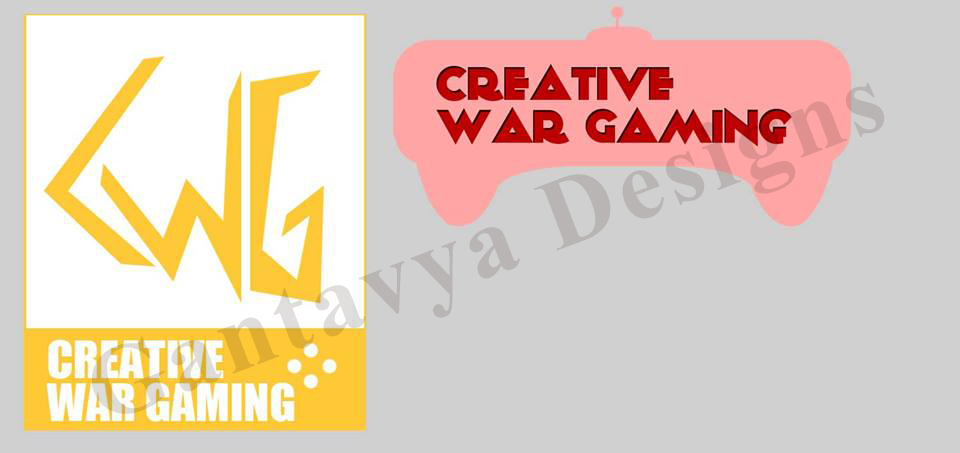
Well here is the end result of project which looks nothing like what i requested! The colours are crazy, it’s so unprofessional i thought it was a joke, i actually started to laugh out loud like you do, also it took 4 days to get these files sent, he watermarked them and theres no way i could use these files for anything even if i wanted to at this stage.
cheap logo design

I’m not joking, here was the second revision where he just changed the shapes and colours out of his own free will.
3 days had passed at this stage. I email him and he emails back talking about off topic news in india and then out of the blue i get an email with no subject or text jus a bunch of low res watermarked jpg files .. Unbelievable

budget logo design
Literally after the third attempt after laughing myself silly i said thanks, please send me the master files.
The seller wanted me to pay £30 for the master files of the third concept below LOL, what was my reply? I politely said it’s okay keep the files and my money i enjoyed the learning curve, i hope your business if you can call it that goes well.

budget logo design

Imagine if i needed this cheap logo design

  1. By now i had wasted 3 weeks of my spare time, but imagine if this was vitally important for me!
  2. I was robbed blindly, after handing over my £15 he wanted another £35 for the final files
  3. I can’t use any of the files this poor seller sent me, i refuse to call him a designer by the way
  4. I have no copyright ertificate stating that i own the logo
  5. If i liked the logo i would have to pay another designer to recreate it so i could have it in the formats i need for print etc
  6. The seller never answered my phone calls and emailed me whenever he wanted to days later. inconvenient
  7. If this was the logo my brand went with then we would get laughed at by visitors to our website as the logo provided screams please don’t trust or buy from me! LOL

Finally….

I knew this would happen as for the price of £15 you can’t offer unlimited revisions as each revision costs human time as robots can’t make bespoke logos YET. Out of £15 paypal eat 4% of that roughly, and the remainder of that is used up in time. So if the designer took 1 hour to make my logo which he probably spent 3 minutes on, then he will have made £14 something for an hours work. However it took 3 weeks, although he didnt work solidly for three weeks he may have spent some time on it. For a UK designer it doesn’t add up and you should be aware of all these factors. Imagine if i wanted 75 revisions, would he have made them? Not a chance lol

The moral of the story is you get what you pay for…

If you want a logo design that will help your product or brand grow more then take a look at our logo design homepage

Starting a Business [blog]

Tips on Starting Up A New Business

Research is Key

First thing you need to do is go out there and research. You need to get to grips with whom your potential customers will be, as well as what they will need and how you can potentially offer it. This will also include key research such as getting appropriate price points to offer you service (which may be lower or higher than you were expecting!).

You will also want to research suppliers and get up to date price lists so you can see the kind of margins you’ll be operating on. This will allow you to see if you can make a viable business or not.

More importantly, don’t be afraid to go back to the drawing board with your initial idea, as you may need to adapt it or come up with a brand new idea totally.

Write Up A Business Plan

The next stage would be turn your research into a viable business plan that will ensure you keep focused on what your business has to offer and how you intend to achieve it.

Look for Partners & Suppliers

If you look for partners in your business whom have relavent skill sets to yours will allow you to keep looking after what your best at and will allow you to share the risk and allow you to share contacts, experience and expertise.

This is the point to start forming relationships with your potential suppliers and testing the waters. You need to quickly weed out those that are a waste of time and will prove to be unreliable (which may reflect on your business) and this is the time to negotiate prices.

Begin Marketing

Marketing is the key to any business that intends to become successful as well as stay successful. Whether this is through mediums such as paid for advertising or through more convention methods such as posters and flyers.

Although many business rely on foot traffic and word of mouth, to reach wider audiences modern businesses have to be ready and willing to embrace other sources of advertisings such as the internet and many business are turning to eBay and other sites to sell their products and service.

Other Considerations

Finances

All business require a certain amount of administration work such as keeping an eye of cash flow, chasing payments as well as ensuring that you have a steady stream of work and that the work you are currently doing isn’t below standard.

Although this is something you may not be good at, you can always bring in someone external or have a partner who is good at look at your finances every now and again to keep everything on track on a regular basis.

Be Aware of Your Own Personal Weaknesses

By being honest with your own strengths and weakness, you can help offset your own weakness and make sure your business is a success. For example, if you’re not good at marketing, considering seeking professional help or even help from a friend to help give you advice and provide a sounding board. If you’re good at what your do but terrible with number, consider hiring an accountant to look after your books.

Marketing & SEO [blog]

A Guide to Writing Great Website Content

All websites need content and that is a fact.

But writing that content can be a daunting or seen as difficult task for even the keenest business owner, but that need not be the case.

Focus on the Message

The thing you need to do is focus on what you want your website visitor to DO on your website. Whether that is to contact you regarding a sales lead, sign up to a newsletter, buy something or just to provide information about the company, all these will help highlight what you will need to write.

Selling Your Service/Products

If you are attempting to get your website traffic to convert to sales or leads, you need to use persuasive copy and know enough about the customers to know what converts them into sales.

Avoid listing the features of the service or products, but simply state the benefits of your service to your customers – if you must list features, list them after the benefits. For example, most customers don’t care that your vacuum cleaner is produces 1,700 watts of power and is only really useful when comparing two models/makes of vacuum cleaner. Indeed, if a customer is looking for a vacuum cleaner, then unless they are looking at several, then the actual suction power is of little value (they just need to know that the vacuum will clean their floors!).

That isn’t to stay listing the technical specs of your products isn’t something you should list somewhere on your site, but it shouldn’t be the only thing you put in your product descriptions (and the actual product specs should be put on a different page where they can be found for those discerning customers).

Generating Leads

If the main purpose of the website is to generate leads, then having a content form on your site is a must and this must be one of the most prominent things on your website page(s).

The copy should be there to compliment the form and not distract from the form. The copy should answer most of the common questions you are likely to be asked (it is always useful to answer actual common questions you’ve gotten). Again, list your benefits and not simply the features of your service.

Informational Sites

These are little more difficult to write for, but obvious content include contact details, a small form for contact and maybe a little about the company (on a separate page preferably so that if the visitor is interested, they can get that information).

Search Engines

The text on your website will invariably be indexed by the search engines (usually within a week), so anything you put up live on a website will be visible for the search engine spiders to see and index. This is a double edged sword as you want to write content for your website in a concise manner but include enough content so that it is useful for your human visitors.

Tips for Writing for the Web

Keep to the Point

Write short, concise sentences. Most people don’t read every single word on the web so keep things short and sweet.

Include headlines

To break up longer pieces and give the user some measure of “scannability”.

Add Emphasis

Using formatting to add emphasis to those things that really matter and to highlight key points.

Use Images

Images are worth a thousand words they say. Use them sparing and to good effect when they are tied into the content.

Spell Check & Proof Read

Get someone else to spell check and proof read your work. If that is not possible, leave it a day or so and re-read it yourself and correct those mistakes.

Website Design [blog]

Why Does Good Website Design Take Time?

Expecting a website designer to create a great website design first time is extremely difficult, if not impossible.

This is because they have to consider several things:

  • The brand identity of the client they are working for? Are they low end or high end customers?
  • Do they have existing branding that the website has to fit into?
  • Who will be the final customers of their client? What are their expectations?
  • Is the client selling Business to Business or Business to Customer?
  • Does the client have an existing website and do they have to carry over the content to the new site? How will this brought over and in what form?
  • What are the functional elements of the design? Are they wanting a login page or ecommerce functionality?
  • What is the competition doing to win sales? Is what they are doing working for them and if so, why?

All these things play a role in the eventual website design and can have many effects in the final design.

There are also design conventions to consider, such as having the main navigation at the top, below the header, placing contact details in the footer (and maybe also in the header).

Good web designers take the time to consider all these questions and come up with a design that takes into account all these factors and many more. They work hard to provide you with designs that work not only for your but your customers as well.

A few things to consider when you get a website concept:

  • Does the website use a lot of images? Will it take lots of time to download and render the website?
  • Is the message or goal of the website clear from the outset? Can you see the purpose of the website is and what the purpose of the company behind it?
  • If the purpose of the website is to get sales, is there anything on there that detracts from that?
  • Does the design look pleasing to the eye and clean?
  • Is all the information you need on the website on the concept such as company information, company number and postal address required by UK law?
  • Is there enough text on the site so that it is possible for search engine “spiders” can index your website?
  • Does the website concept appear to have all the items it will need to appear credible to the customer, including client testimonials, partners and the like?
  • Is the text easy to read and clear and big enough?
  • Are the links clearly defined? Is it apparent what can be click on and what can’t?
  • Is the information presented easily understood by the demographics?

Only when you know the answers to these questions will you be able to see the pitfalls of any potential design. And remember you are not designing the website for YOU, your designing it for your CUSTOMERS.

Printing [blog]

Why Bleed & The “Safe Zone” Are Important to Printing

The Bleed

When it comes to professional printing, it is important that you have a something called a bleed and that all your important content are within the safe zone.

This comes about because of the nature of the printing process itself.

Commercial printers often print on massive runs (hence why printing 250 business cards costs relatively so little compared to doing it yourself – especially when you factor in time spent, printer ink, cost of the paper etc).

Due to the fact that printing right to the edge of the paper is extremely difficult (mainly due to the fact the getting the paper positioned accurately in the printer is difficult). To get around this, commercial printers will print business cards (and other business stationery) on larger paper than necessary and will print each card/stationery item 6mm larger than the final product will be when finished.

The cards/stationery are then cut down after the print run is complete on large cutting presses down the proper size of 85mm by 55mm (for cards that is, letterheads etc are cropped to their proper dimension).

So the Bleed is merely there to ensure that the design stretches all the way across the edge and to give the cutting machine a tiny margin of error.

So they the “Safe Zone” Then?

Commercial printers often emphasis a safe zone of 3mm. Due to the nature of the cropping machines, they may “drift” a little during the print run which means that the artwork may not be perfectly centred in the cutter when the cut is made. The 3mm safe zone is to safeguard against this and ensure that all the important details (such as your contact details) aren’t cut or cropped.

Without the 3mm safe zone, the card details could be cut off, leaving you with a potentially useless card.

Starting a Business [blog]

How To Turn Your Business Idea Into A Reality

Are you thinking of starting a business around your new idea, or perhaps turning a hobby into it’s own business venture, then you’ll want to take heed of the following steps:

1. Research your market

Identify potential customers and talk to them and find out if your idea is meeting a real need in the market.

2. Develop and Plan

Test your product and service with real customers, make changes, and test it again. Keep going until you know your service is meeting all the needs of your clients and exceeding expectations.

3. Find partners and suppliers

Every business needs suppliers, even virtual online business needs suppliers for supply them with the hosting for their website but you’ll not only need to know the costs involved, but also what level of support they are willing to offer – when the server crashes, will your host leave you to sort it out yourself or will they offer a hand or even take over and restore the website for you?

4. Set up the Business

Do your research into the types of business available and find out which structure is right for your business? Is your business potentially risky and you need the personal protection of a Limited Company can provide, or will going into a partnership help you to raise the capital investment required?

5. Get Funding

Explore different avenues of business finance, from bank loans to government backed schemes through to searching for this illusive business angels.

Also research your “expected” revenue streams so you can see if your business is viable or not in the long term.

Printing [blog]

Why do my colours look different when printed?

The main reason for this is simply because of the way commercial printers work – they work on a colour model called CYMK (also known as Cyan, Yellow, Magenta & Key – Black).

Our monitors work on a colour model called RG (or Red, Green & Blue) and these two colour models work on separate ideas.

In short, CYMK works on 4 different colours, whereas RGB works on 3 colours. The reason for this is that your monitor has tiny dots of colour colour pixels, which are individually made up for 3 different coloured dots which are, you guessed it, red, green & blue.

CYMK on the other hand is based on the four different colours which are printed onto the paper which can make most colours easily (although not ALL colours are possible with CYMK that are possible with RGB).

The Additive Model

RGB is known as the additive model because it works on the assumption that you are you working from black to white – this is why when you have 0% red, 0% green & 0% blue you get black and on the flip-side 100% red, green & blue you get white.

This came out because the screens are naturally black and the pixels expel light in the relative wavelengths our eyes can see.

The Subtractive Model

CYMK on the other hand is known as the subtractive model because it works from white through to white (with 0% of all the four elements of CYMK being pure white). As you can see, this is completely opposite of RGB as you start to add colours, you get darker and darker colours, eventually leading to black.

This is due to the fact that printers work on white paper stock, and the inks are added to the surface which reflect different wave lengths based on which ink(s) are present and in what saturation.

So why don’t they look exactly same?

This is due to the fact that converting from one colour model to the other may not produce an exact match. In fact, this is partly because the RGB colour model can theoretically produce more hues and colours than the CYMK model, so producing an exact match is virtually impossible.

In fact, the RGB model can produce up to 16,777,216 different colour hues and shades (although distinguishing between two closely related shades with the naked eye is fairly hard if not impossible) whereas the CMYK model can only produce around 10,000,000 different shades.